
Service designing rowers – Tyne United Rowing Club’s membership experience
31.12.2025
Member experience, sports club, service design, rowing
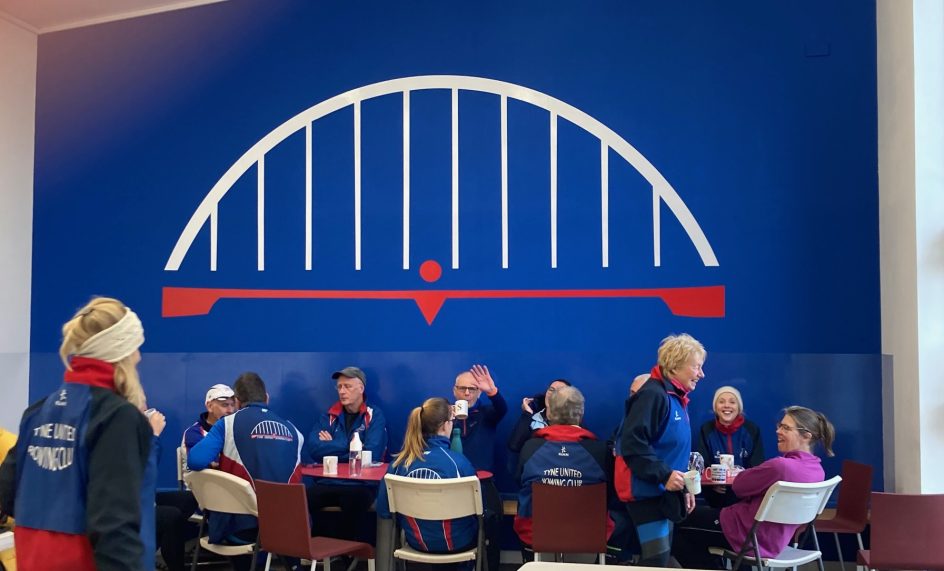
Tyne United Rowing Club (TURC) is a volunteer run rowing club that relies on healthy membership numbers and good club culture to continue its activities in the future. This article contemplates the service design thesis project that aimed to discover and define issues related to running the club and being a club member.
Personal bias as research driver
Rowing was never under the author’s radar until the Covid-19 pandemic, when they longed for outdoor activities after months cooped up indoors. They joined a Learn to Row course at the first club offering one, TURC. Afterwards the author joined as a full member and, by the end of their first year, were hooked on rowing. Entering the club, however, was not easy. Not knowing the rowing history or culture, the author had to learn everything from scratch: Rowing terminology can be obscure, so they had to work hard to know their sculling from sweeping. Keenness was noticed, and they were asked to take on the role of L2R coordinator, a position they took on with pride. With background in recruitment and studying service design, they wanted to improve and measure the learner experience. The position also granted access to the rowing management and executive meetings which helped to understand the club goings-on and relationships better. At this point, they approached the club leads with a club development project for their dissertation and with their permission, started to research the club and its members. It was convenient to study something so close to their heart; previous attempts with different organisations had ended up in long delays in replies, however with TURC the author benefited from directly contacting other members through WhatsApp or internal shared platforms.
Service Design as Objective Lens
By applying service design in the research, the author gained a more balanced view of the club. Benchmarking competing clubs gave the author an updated position for TURC in its margin and interviews with key volunteers helped to understand individuals better as they were open to converse in a semi-formal setting, rather than during a rowing session when everyone was busy with pre- or post-session tasks. Having noticed the silos within the club already, the membership survey provided a view to all club members and their thoughts about rowing, membership and what could be done better: Junior rowers surprised the author with thoughtful reflections on their experiences and impact to their squad. Finally, the co-design workshops arranged at the club gave the author a different role to the usual as they facilitated fellow members through exercises. This gave them a chance to observe them in contemplation, their ways of communicating in bigger groups and their leadership skills. By way of applying these methods to a close study subject, the author was able to gain useful insights of the members as human beings, not just rowers.
Magic of co-design
The author considers co-design as one of the most engaging ways to not only gain useful, direct insight from the service users themselves, but also a way to build engagement in a more long-lasting way. The club members were invited to co-design workshops with the promise of being able to contribute to the future to the club. 17 members signed up unfamiliar with service design as such but some in their professional lives had participated in different workshops. The exercises, first evaluating their experience before putting on their solution hats on, surprised many and the author had to facilitate with probing questions and statements. However, once able to speak out and explain in groups what they thought of their personal experiences, the participants gelled into groups easily to talk about possible solutions, empathising with each other and planning the activities with members’ leadership and involvement in mind. The workshops resulted in five practical concepts to promote water safety, steering skills, volunteering task organisation, and rower development, but the enthusiasm and appreciation perceived from the participants speak of much greater impact on their feelings and attitudes as TURC members.
Continuing to paddle on
The service design process worked as a catalyser for TURC members to stop to think and reflect on their wishes and goals as rowers and club members. The suggested concepts are activity for the following spring, and many have reached out to the author to contribute and organise. For a sports club initially suffering from lack of proactive members, the research project pushed the right buttons for the club’s future endeavours and member-led development.
Jokipaltio, V. (2025). Service designing rowers –Tyne United Rowing Club’s membership experience. Master’s Thesis. Turku University of Applied Sciences.
Picture: Vappu Jokipaltio.