
Clean and Affordable Energy in Sri Lanka’s Plantation Sector, Progress Towards SDG 7
Plantation communities still face major energy challenges
The role that has been played by the plantation sector in the economic performance of Sri Lanka has been crucial since more than one century ago. Plantations such as tea have helped in generating employment, exports, and rural development. However, despite the contributions made by the plantations in the economy of the country, plantation communities in Sri Lanka are still living in poor conditions without access to modern energy sources.
Sustainable Development Goal number seven is commonly known as SDG 7. Its objective is to ensure that all people are supplied with clean, affordable, reliable, and modern sources of energy by the year 2030. In addition, it aims to increase the usage of renewable energy sources and enhance energy efficiency.
These findings have been based on a study carried out within a tea plantation estate community, called “Mattekelle Estate” in Sri Lanka. The study aimed to understand the current energy situation, evaluate its impacts, and identify possible renewable energy solutions.
Current energy situation of the plantation sector
The current energy situation in the plantation community was evaluated using the 4A’s framework.
The four dimensions are:
- Availability
- Accessibility
- Affordability
- Acceptability
The results suggested that all four areas still need to be improved. Although the energy services are available in plantation communities, the reality on the ground reveals that most people in these communities continue to experience limitations in using them. There are some families unable to pay expensive energy bills. The study showed that factors such as high prices of electricity, poverty, and inefficient household settings lead to low standards of living among plantation communities.
Access to clean energy for cooking and reliable energy for lighting is still limited for some households. Firewood is still used for cooking, while kerosene is also used by some households. Even though firewood is a cheap source of energy for many households, using it regularly increases environmental pollution and causes health issues for people. According to the results, the most important finding was energy cost, which makes more pressure on the plantation community. Overall, findings from the study showed that energy insecurity is still a big challenge to this plantation community.
Renewable energy can support SDG 7 progress
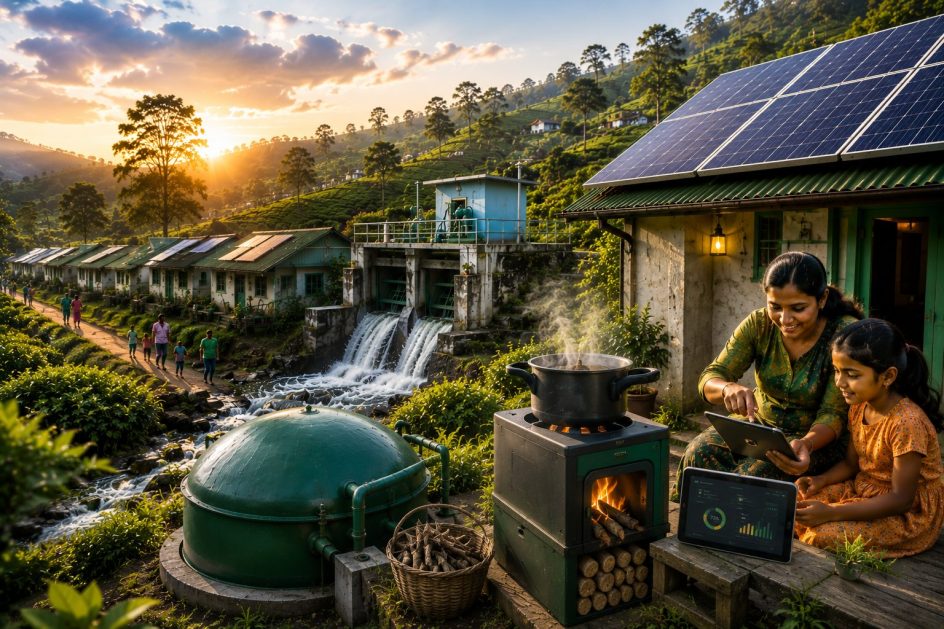
According to the results, it showed that the renewable energy sources can help in addressing the current challenges faced in the plantations. Because Sri Lanka offers huge possibilities for using renewable energy, such as solar systems, mini hydro systems, and biomass digesters. Also, among them, solar energy has become one of the fastest growing energy sources in Sri Lanka.
Renewable energy sources can:
- Lower electricity bills
- Enhance electricity reliability
- Lower reliance on imported fossil fuels
- Contribute to sustainable environment
However, at the same time, the study found that there are some obstacles that delay the development of renewable energy sources in the plantation sector.
Major barriers to renewable energy adoption
The following were found to be some of the obstacles that delayed the plantation sector from adopting renewable energy.
The major hurdles are:
- The cost of installing renewable energy is high
- Lack of knowledge on clean energy technologies
- Insufficient infrastructure in rural areas
- Policy and legislative delays
It is evident that the adoption of renewable energy demands careful planning and proper institutions.
Ensure equal access to plantation communities
Improving equal energy access in plantation communities requires coordination among the government, plantation companies, energy organizations, and development organizations. Grants, subsidies, and awareness campaigns will further aid in the use of renewable energy resources.
Energy that is affordable and sustainable is extremely important for development. Achieving SDG 7 within the plantation sector of Sri Lanka will develop education access, healthcare facilities, communication services, and the living standard of plantation sector communities.
Based on the results of this study, it is suggested that energy security not only impacts the environment but is also a case of social justice. Even though plantation communities have limited access to clean and affordable energy, they are still greatly contributing to the economic development of Sri Lanka through industries such as tea exportation,
If the plantation sector can achieve energy security, children will benefit from education, information access, healthy lives and safe homes. This shift could further help Sri Lanka meet its sustainability goals as well.
There has been some progress achieved, but still a need to make sure plantation communities do not get left behind in Sri Lanka’s efforts towards sustainable energy. To move towards a sustainable future, collaboration between public institutions and private stakeholders will be necessary. Overall, to improve equal access to energy in the plantation sector, it requires great attention to affordability, accessibility, and long term sustainability.
Reference
Gihan, P., Mahesh, R. G. and Shashika, K. (2026). An Analysis of Energy Security and Progress Towards SDG 7 in the Sri Lankan Plantation Sector.
Image: Chat GPT