

Evaluating and developing R&D process by applying the Burke-Litwin model in an international industrial context
R&D in international industrial companies typically exists within a complex environment influenced by multiple internal and external forces. Despite organizational investment in innovation and the establishment of clear objectives; aligning strategic intent with daily R&D activities can be challenging. This gap highlights the need to better understand how strategy translates into everyday work and how organisations can improve alignment across different levels (Kaplan & Norton, 2008; Tidd & Bessant, 2021).
R&D process as a system-level challenge
In many industrial organisations, R&D is expected to deliver both stability and flexibility. R&D should comply with clear strategic emphasis and structured planning on the one hand, meanwhile, it has to adapt to the dynamic needs of different customers, potential technological developments, as well as competition pressures (Tidd & Bessant, 2021). In practice, this combination can make it difficult to maintain consistency in how decisions are made and how work progresses.
Because of this, R&D challenges rarely originate from a single source. Instead, they tend to emerge from how different parts of the organisation interact (Tidd & Bessant, 2021). For example, unclear prioritization fails to support the chosen strategy, negatively impacting communication, responsibility assignment, and collaborative decision-making. Similarly, inefficiencies in execution may reflect earlier gaps in alignment rather than issues in the execution phase itself (Kaplan & Norton, 2008).
This perspective shifts the focus from individual processes to the organisation as a whole. Therefore, understanding R&D performance requires a consideration of how strategy, structure, processes, and people interrelate and influence each other. This type of system view is often considered useful when attempting to understand R&D in more complex industrial environments (Kaplan & Norton, 2008; Tidd & Bessant, 2021).
How the Burke-Litwin model supports evaluation in this context
The Burke-Litwin model provides a structured way to analyse organisations, including R&D organisations, as interconnected systems rather than separate functions (Burke & Litwin, 1992). A key feature of the model is that it organises these elements into different levels, ranging from strategic and leadership-related aspects at the top to operational practices and individual experiences at the bottom. This makes it particularly helpful in international R&D contexts, where outcomes are rarely driven by one factor alone, but rather by how different elements interact over time (Burke & Litwin, 1992; Tidd & Bessant, 2021).
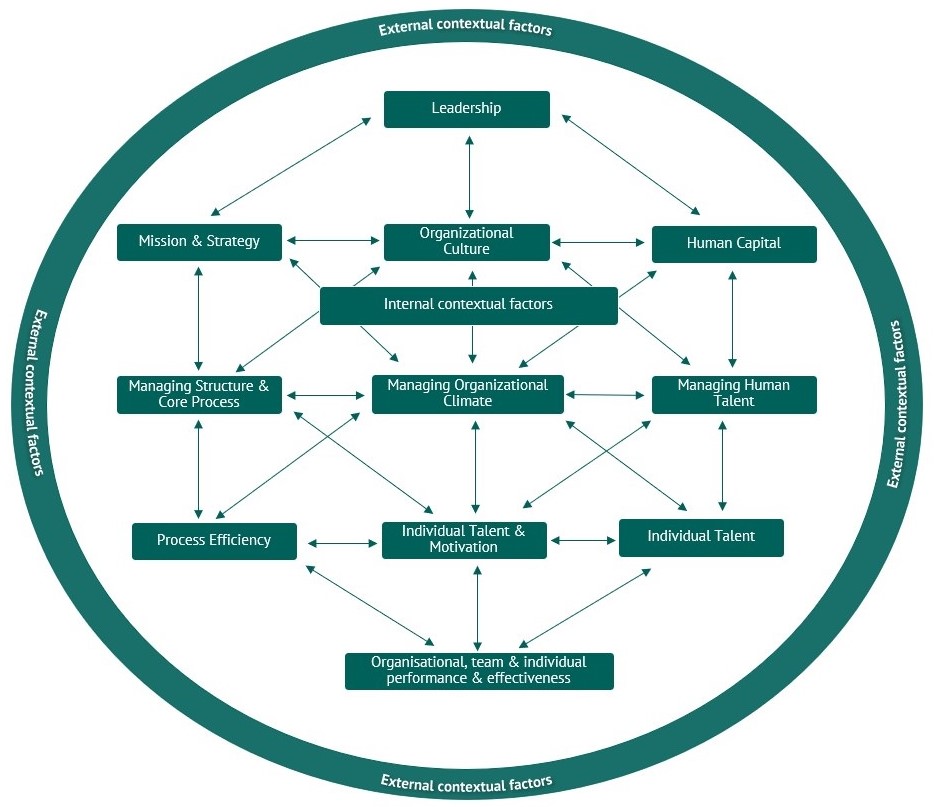
Figure 1 Adapted Burke-Litwin model (Spangenberg & Theron, 2013).
The Burke-Litwin model highlights that organizational elements like leadership, strategy, culture, structure, and processes are not independent of each other. As illustrated in Figure 1, the model revised by Spangenberg & Theron (2013) , the organizational elements continuously influence one another while also being shaped by the external environment rather than just a top-down influence of the elements in hierarchical fashion. In practical terms, the external environment includes factors such as customers, competitors, regulations, and such ,and they create ongoing pressure for an organization to adapt. The same happens in the context of R&D as well.
Within the model, evaluation can happen across different levels. At the upper level , or transformational level, leadership and strategy set the direction, but the key question is whether that direction actually becomes meaningful in daily work. In many organizations, strategy is reasonably well defined but not always clearly translated into actionable priorities, which tends to lead to differences in interpretation and inconsistent execution further down the organization (Kaplan & Norton, 2008).
At the operational, or transactional level, elements like organizational culture, structure, management practices, and systems determine how strategic direction gets translated into coordinated action in practice (Burke & Litwin, 1992; Spangenberg & Theron, 2013). In R&D context specifically, these elements shape how the R&D projects get organized, how decisions get made, and how teams actually collaborate day to day to execute the projects (Tirpak et al., 2006).
Organisational culture plays a particularly important role in how these dynamics unfold. It refers to the shared ways of thinking and working that develop within an organization over time, often without being explicitly stated or documented anywhere. In a case study of the R&D context, strong collaboration and flexibility can help teams respond quickly to challenges. Still, at the same time, these strengths can also make structural problems less visible because effective informal coordination among the team can reduce the need for structured processes and thereby gradually replace clear processes rather than supplementing them (Schein, 2010).
Structure and management practices are closely related to daily operations of an organization and they determine how work gets organized and coordinated in practice. Structure defines roles and responsibilities, while management practices shape how decisions are made and communicated across the organization (Burke & Litwin, 1992; Spangenberg & Theron, 2013). When roles are unclear or decision-making is inconsistent, R&D teams may experience confusion or delays, even if individuals are perfectly capable and motivated to do good work (Schein, 2010).
Systems and processes represent how work is formally organised, including planning routines and governance structures. The Burke-Litwin model highlights that these systems are only effective when they are aligned with strategy, leadership, and culture (Burke & Litwin, 1992; Spangenberg & Theron, 2013).
At the individual level, skills, needs, and motivation reflect how organizational alignment is actually experienced in everyday work. When expectations and roles are not fully clear, it tends to affect how people experience their work and their sense of contribution, even when they are committed and have the capability to perform well (Schein, 2010).
One of the main strengths of the Burke-Litwin model is that it makes these connections more visible and helps in identifying the patterns of misalignment among the organizational elements that might not be obvious when looking at any one part of the organizational elements in isolation (Burke & Litwin, 1992; Spangenberg & Theron, 2013). The same diagnosis of organizational issues and misalignment in the organizational elements helps to identify the problems prevalent in R&D activities in an organization as well, and thus makes the framework suitable for such a diagnosis in R&D process, especially in international organizations where such organizational elements are diverse and spread across multiple sub-organizations in multiple geographical locations where cultural diversity is usually at a large scale.
Bridging evaluation and development through structured ways of working
While the Burke-Litwin model provides a good framework for diagnosing the organizational issues, explaining what is happening and why, it does not on its own provide a practical method for the solutions. To bridge this gap, integrating the case study insights into a structured framework—such as the PDCA-based approach of ISO 56002:2019—can be highly effective
ISO 56002:2019 is an international standard that provides a governance oriented framework for managing innovation as a coordinated organizational system. The standard does not prescribe specific tools or organizational structures. It only provides guidance on how innovation-related activities can be planned, executed, reviewed, and improved in a systematic and repeatable way (International Organization for Standardization, 2019).
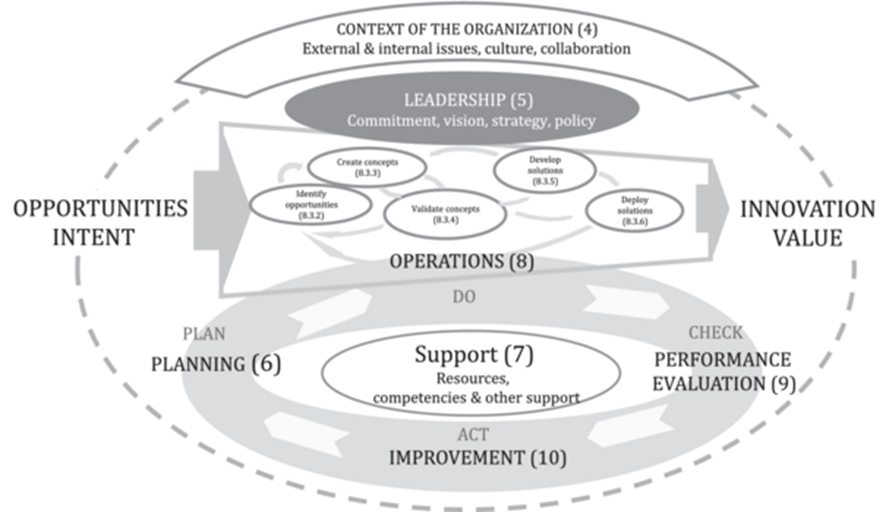
Figure 2 Innovation management system framework (adapted from ISO 56002:2019, Figure 1).
Figure 2 refers to the innovation management system framework from ISO 56002, which highlights the PDCA cycle, where PDCA stands for Plan-Do-Check-Act. The PDCA cycle is widely used as a method for organising work and improving it over time. The application of this method, here in the context of R&D is to solve the alignment challenges identified through the Burke-Litwin framework.
The planning phase provides a structured starting point where the purpose, priorities, and readiness of an initiative get clarified before work begins. That strengthens the connection between strategy and execution in the context of the organization and leadership as well as reduces the likelihood of starting work without a clear sense of direction. The execution phase focuses on carrying out work through a structured process, which is bi-directional in nature meaning that the process can be restarted with previous phase when needed. The checking phase introduces reflection, giving teams a structured opportunity to review whether work is still aligned with the goals it was meant to serve. And the acting phase ensures that what gets learned along the way actually feeds back into future work rather than getting forgotten.
In addition to the PDCA logic, the approach also emphasizes governance, clarity in decision-making, defined responsibilities, feedback loops, and such and all of which connect directly to the organizational elements of the Burke-Litwin model. Those elements help ensure that improvements are not just about processes but also about how decisions get made and how work gets coordinated across functions.
The reason PDCA is suitable in an R&D process is the balance it strikes between simplicity and effectiveness by providing a clear and repeatable approach that supports alignment without restricting adaptability needed in an overly complex working environment, where process implementation is difficult, and too little structure may lead to inconsistency (Tidd & Bessant, 2021). Therefore, the structured framework of the PDCA cycle within ISO 56002 enables a seamless transition from diagnosing issues via the Burke-Litwin model to actively resolving them.
Conclusion
The Burke-Litwin model fits well with the evaluation of organizational activities such as R&D process because it captures the interconnected nature of organizational elements and their challenges, especially in international industrial companies where the challenges get even more complicated. This framework how the organizational elements incluence each other, external factors in particular in the revised model affecting the outcomes of the organization.
However, despite being a good tool for diagnosis of issues, the model does not provide a direct approach for the solution of the identified issues. In such case, the PDCA based process in ISO 56002 becomes handy in soliving the issues in practice. The combined use of the two frameworks can be seen as strong for evaluation and useful for improving the organizational process in real cases like R&D process in industrial context.
References
Burke, W. W., & Litwin, G. H. (1992). A causal model of organizational performance and change. Journal of Management, 18(3), 523–545. https://doi.org/10.1177/014920639201800306
International Organization for Standardization. (2019). Innovation management — Innovation management system — Guidance (ISO Standard No. 56002:2019).
Kaplan, R. S., & Norton, D. P. (2008). The execution premium: Linking strategy to operations for competitive advantage. Harvard Business School Press.
Schein, E. H. (2010). Organizational culture and leadership (4th ed.). Jossey-Bass.
Spangenberg, H., & Theron, C. (2013). The revised Burke-Litwin model: Research findings, refinements and evidence for the model. Management Dynamics, 22(2), 29–48.
Tidd, J., & Bessant, J. (2021). Managing innovation: Integrating technological, market and organizational change (7th ed.). Wiley. Tirpak, T. M., Miller, R., Schwartz, L., & Kashdan, D. (2006). R&D Structure in A Changing World. Research-Technology Management, 49(5), 19–26. https://doi.org/10.1080/08956308.2006.11657394