
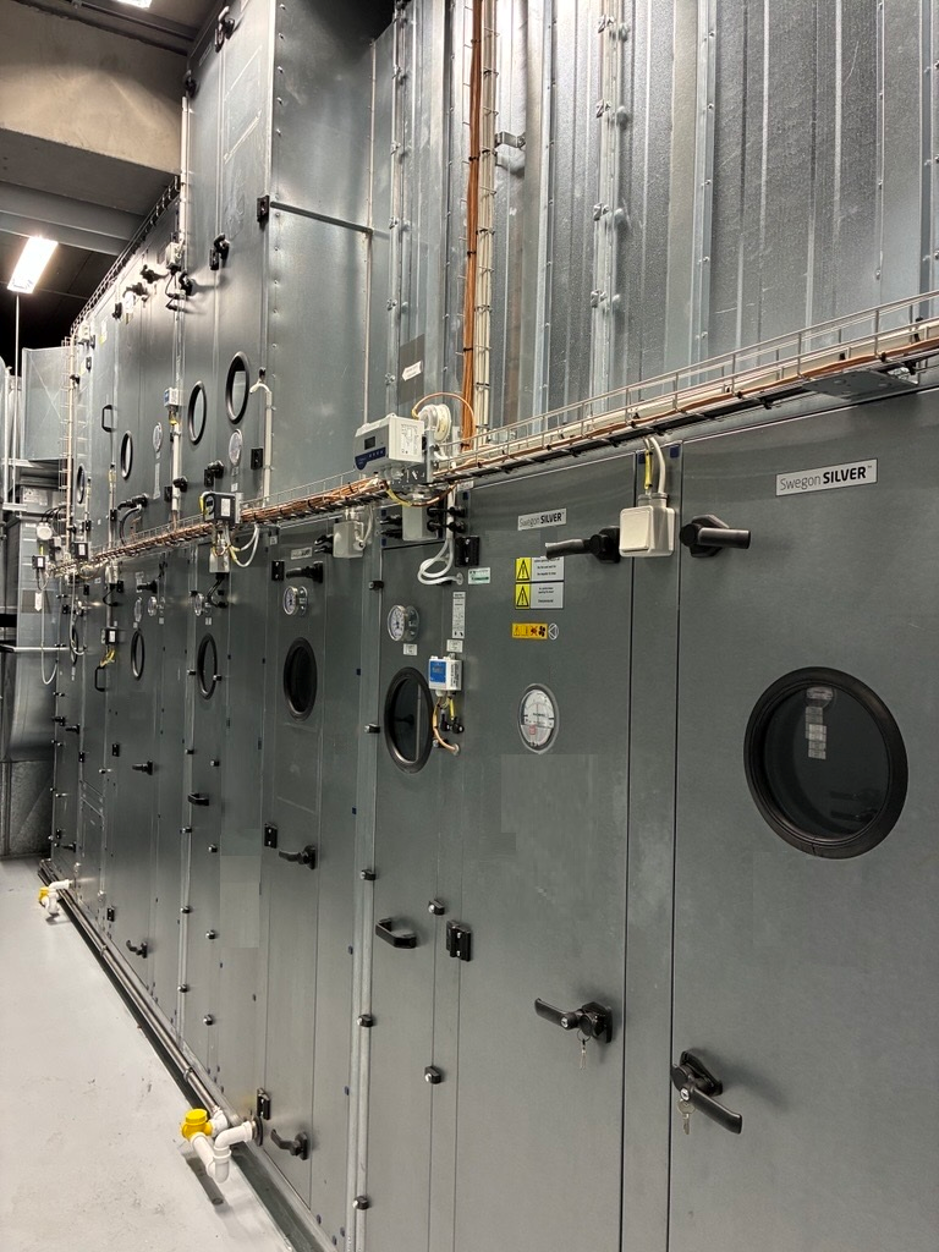
General HVAC requirements in tablet production
HVAC systems play an important role in pharmaceutical tablet production by maintaining the environmental conditions required for the manufacturing process.
Pharmaceutical manufacturing has strict requirements to maintain suitable production conditions. The requirements are defined based on the product being manufactured and the Active Pharmaceutical Ingredient (API).
Heating, Ventilation, and Air Conditioning (HVAC) systems are used to maintain the required environmental conditions in production areas. HVAC systems control factors such as temperature, relative humidity, and air quality to ensure that suitable production conditions are maintained throughout the manufacturing process.
Environmental requirements in tablet production
Good Manufacturing Practice (GMP) sets requirements for the environment where medicinal products are manufactured. The production facilities and equipment must be suitable for the production operations and designed to reduce risks that could affect the product quality. According to the European Commission (2014, chapter 3), factors such as temperature, humidity, and ventilation must be appropriate for the medicinal products that are being manufactured.
The environmental requirements can differ depending on the product and the manufacturing process. Maintaining these conditions requires HVAC systems to be designed and operated according to the requirements of the production area.
How HVAC systems maintain production conditions
According to the World Health Organization (2018, pp. 258–266), the HVAC systems treat the air supplied to the production areas to maintain the required environmental conditions. Outdoor and return air can pass through several treatment stages before reaching the production areas. Depending on the requirements, the treatment stages can include
- Filtration to remove particles from the air
- Heating and cooling to control the air temperature
- Humidity control to maintain required moisture levels
- Ventilation to provide and distribute the treated air
The amount of supply and extract air must be controlled to maintain the required airflow and pressure conditions in and between production areas. Controlling airflow and pressure differentials can help reduce the movement of contaminants between production areas.
Temperature and humidity control
Temperature and humidity are important environmental conditions in tablet production. The required conditions depend on the product and manufacturing process and must be maintained during production operations.
According to the World Health Organization (2019, pp. 106–116), HVAC systems control the temperature by heating or cooling the supplied air. In addition, the humidity can also be controlled through the cooling process. When humid air is cooled sufficiently, moisture condenses from the air. The condensed moisture is collected and drained, while the dehumidified air continues the air treatment process. This allows the cooling coil to provide both cooling and dehumidification.
Outdoor conditions can affect the cooling and dehumidification demand of HVAC systems. During warm and humid periods, the system must remove both heat and moisture from the incoming air. The cooling and dehumidification capacity must therefore be sufficient to maintain the required production conditions during changing outdoor conditions.
Airflow and contamination control
According to the World Health Organization (2018, p. 261), airflow and contamination control are important parts of the HVAC system in tablet production. The supplied air passes through filters to reduce airborne particles before being distributed to the production areas. The required level of filtration depends on the requirements of the production area.
Airflow and pressure differences between rooms can also be used to control the movement of air. By maintaining pressure differences between areas, airflow can be directed from one area to another, reducing the movement of airborne contaminants between production areas.
The supply and extract airflow must therefore be balanced according to the requirements of the production area. The pressure conditions and airflow direction should also be monitored to ensure the requirements are maintained during operation.
Reliable HVAC operation
The reliability of HVAC systems is important to ensure the required production conditions are maintained throughout the production process. Environmental conditions such as temperature, humidity and pressure differences should be monitored to identify changes that could affect the production environment.
According to the World Health Organization (2018, pp. 267–269), HVAC systems require regular preventive maintenance. Components such as filters, heating and cooling coils, fans and sensors should be maintained to ensure the system continues to function as intended. Periodic assessments of the HVAC unit can identify changes in equipment condition and performance before they affect production.
HVAC systems are therefore an important part of maintaining a suitable environment for pharmaceutical tablet production. The systems must be designed according to the production requirements and remain capable of maintaining the required conditions for production. Monitoring and preventive maintenance are important to support reliable HVAC operation and continued compliance with production requirements.
Sources
European Commission. “EudraLex, volume 4: EU guidelines for good manufacturing practice for medicinal products for human and veterinary use. Part 1, chapter 3: Premises and equipment.” 2014. <https://health.ec.europa.eu/document/download/18d76565-137b-41d2-a602-794527f708c1_en?filename=chapter_3.pdf>.
World Health Organization. “Guidelines on heating, ventilation and air-conditioning systems for non-sterile pharmaceutical products (WHO Technical Report Series No. 1010, Annex 8).” 2018. <https://www.who.int/publications/m/item/Annex-8-trs-1010>.
World Health Organization “Guidelines on heating, ventilation and air-conditioning systems for non-sterile pharmaceutical products. Part 2: Interpretation of guidelines on heating, ventilation and air-conditioning systems for non-sterile pharmaceutical products.” 2019. <https://www.who.int/publications/m/item/trs1019-annex2>.