
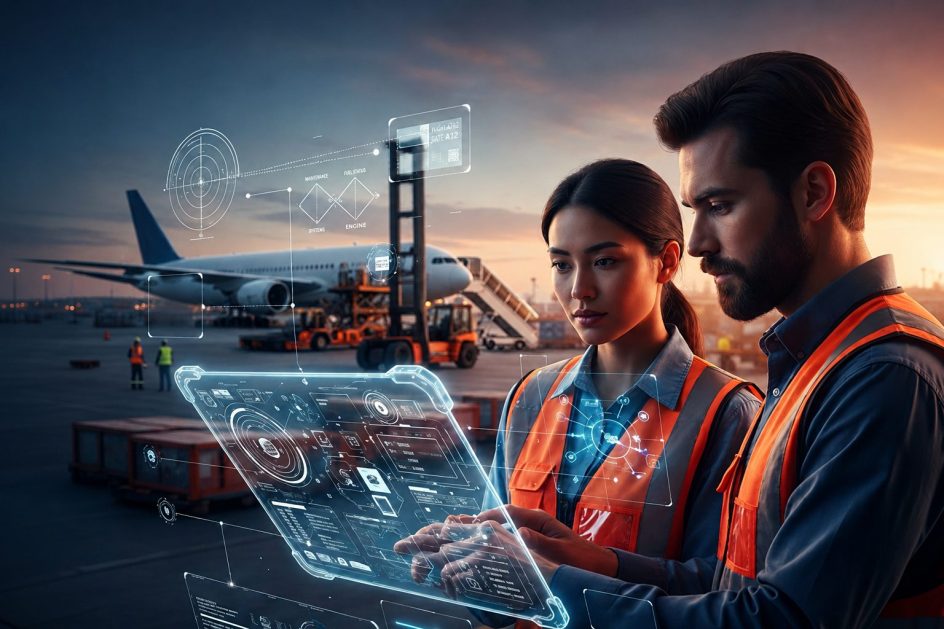
The Forgotten User: Designing Modern Interfaces for the Air Cargo Workforce
When the technological environment is neglected, even a strong organizational culture cannot prevent burnout.
The Invisible Workforce: How Air Cargo Keeps the World Moving
Consider the modern environment. Many everyday items originate from distant locations, having traveled thousands of miles before reaching their destination. Chances are, air cargo transported many of those items, parts of the phone or computer that you are reading this article from, essential medication, and even the fresh produce found on grocery store shelves relies on air freight to arrive on time. Air cargo is an invisible workforce working to keep our supply chain moving. Invisible because people rarely witness the intricate operations functioning in the background, or consider the critical nature of this transportation mode. Airlines can carry cargo either on a freighter (an aircraft dedicated solely to goods) or within a passenger aircraft’s belly, where space varies by model. Cargo can be transported to most of the routes and destinations an airline flies, but to increase market reach, interline agreements can be used. An interline can be defined as a relationship between airlines where one airline sells the services provided by another airline; this way, an airline can serve and reach markets it would be unable to serve and access on its own
Beyond the Package: Why Service Design Is Not Just for Customers
Successful companies typically place customers at the center of their strategies, which is logical, as customers utilize the services and generate the revenue that sustains the business. Consequently, companies put extra effort into the customer-facing products, they make sure the user interface is intuitive, and the user experience is smooth. In this whole process, often, the tools used internally by employees are not given enough attention to improve, which puts the employee experience in the back seat. Employee experience refers to how an employee perceives their organization throughout their tenure, and the tools that an employee uses every day have a great impact on their overall experience. When employees have better tools and processes, they are more efficient, less stressed, and make fewer errors, which ultimately benefits the customer. That is where service design comes into play. Service design focuses on the comprehensive, end-to-end delivery of a service. It ensures that the entire ecosystem – including backend processes, digital platforms, and human interactions – works in harmony to create a seamless experience. This discipline connects the dots between User Experience (UX), Customer Journey (CX), and Employee Experience (EX), viewing them as interconnected parts of a single system. Crucially, designers and users co-create solutions, collaborating as partners in the whole design process.
Employee experience is comprised of three main environments: a physical environment, a cultural environment, and a technological environment. A physical environment can be described as a physical workplace that one can see, touch, and feel. Aspects affecting the physical environment can be the location of the office premises, cozy cafeteria, and huge glass windows. A cultural environment can be described as what an employee feels about a company, how the mood is set once an employee walks into the workplace, and the vibe in the office drains or energizes an employee. The technological environment refers to the tools employees use to get their work done. This can include everything from the operating system a company might use to the apps that are approved to be used on the company phone. In today’s world, it is impossible to survive and grow if a company is totally oblivious to technology; thus, all companies incorporate some sort of digital services to manage their work. If the technological tools that an employee uses to get their work done are not developed to keep the employee’s experience in mind, it will only make their job difficult, and the work done can be inefficient. The time wasted on dealing with these tools could have been spent on doing other meaningful work
When it comes to the technological environment, there can be several pain points, such as legacy systems, manual processes, and a lack of integration. Using service design methods and tools, the technological environment can be significantly improved, and increased efficiency and error reduction can be achieved. Service design emphasizes adopting a user-centric approach by shifting the focus from the product to the actual user needs, making user experience exceptional by removing friction from daily tasks. By taking this holistic view, designers ensure the technology supports the person, rather than forcing the person to adapt to the technology. When the technological environment is neglected, even a strong organizational culture cannot prevent burnout, because the fundamental mechanics of the job are broken.
From Theory to Runway: Why Employee Portals Deserve Better Design
The digital transformation of interline rate management provides a clear example of these service design principles in action. As previously mentioned, interlines are the ”connective tissue” of the air cargo world, allowing airlines to reach destinations far beyond their own flight paths. However, back-office staff have traditionally managed these agreements and rates through complex, manual tasks.
The service design methodology framed this challenge as a human-centered problem rather than a standard software update. Instead of simply building a new database, the process began with shadowing and co-creation. By observing the specialists who manage these rates daily and using the service design tools such as surveys, the primary ”pain point” was identified, and it was not the data itself – it was the cognitive load of navigating fragmented systems and manual cross-referencing.
The resulting tool was designed to act as a unified dashboard, bringing all the necessary information into one clear view. Prioritizing the ’Technological Environment’ eliminated the need for employees to constantly jump back and forth between disconnected spreadsheets. Instead of wasting time searching through different windows, this tool enables employees to use a single, integrated interface that keeps everything they need in one place.
- Minimum Viable Product With Purpose: Developed a minimum viable product to test workflows with the actual employees and improve the design with continuous feedback.
- Contextual User Interface: Designing an interface that prioritizes the most critical information, reducing the time spent searching for rate discrepancies.
- Seamless Integration: Automating the background data flow to eliminate the need for manual re-entry, which is a major source of human error.
The result of this service design approach was a shift from manual work to an empowered workflow. By treating the cargo office staff as ”users” who deserve the same intuitive experience as a retail customer, the airline not only upgraded a tool – it fundamentally optimized the operational environment for its workforce.
To conclude, it is highly encouraged to think about design beyond consumer products and recognize its power to transform essential industries and improve the lives of the ”forgotten users.”
References:
Mir, H. (2026). Design and Implementation of an Integrated Portal for Managing Airline Cargo Rates. Master’s Thesis. Turku University of Applied Sciences.
Image: OpenAI. (2026). ChatGPT (May 2026 version) [Large language model]. https://chatgpt.com/