
A Case Study of Designing Services for Immigrants
In order to develop services that truly support integration, it is crucial to understand immigrants’ daily lives and empathize with them. This article explains how Lianyi Wang helped the Marhaban Centre in Tampere to gain a deeper understanding of the situations and expectations of immigrants by using service design tools. This understanding then guided the organisation in improving its user-centred services.
In recent years, a growing number of immigrants have moved to Finland. However, they often encounter language barriers, financial difficulties, uncertain futures, cultural differences, and mental health issues. While government support in the form of integration programmes, language learning, and employment services is important, immigrants also need emotional support to encourage their integration into the local community.
The service design case study took place at the Marhaban Centre, an international living room providing services mainly for immigrants in the centre of Tampere. Marhaban’s target group is refugees/asylum seekers, international students, other immigrants, and the locals. The aim is to integrate immigrants into local community life. How can service design help develop Marhaban’s immigrant-centric services?
Transforming research data into human stories
A persona represents a group of customers with shared needs or common behavioral patterns. Unlike stereotypes, personas are created based on research.
Three personas were created to represent the Marhaban Centre’s main customer groups: refugee mothers, young international students, and middle-aged student spouses.
- Hawa is a Somalian refugee and mother of five who fled her home country. She has no work experience. She wants to build a safe and peaceful life for her family and become self-sufficient.
- Lamia is in her second year of a master’s degree at Tampere University of Applied Sciences (TAMK). She hopes to live in a safe, egalitarian society that offers better opportunities for single women.
- Minh has a diploma in mechanics and 15 years of experience working in the field in his home country of Vietnam. Currently, he spends most of his time doing household duties. Minh has just started his integration program to learn Finnish.
These personas help people to understand that expectations of integration services can vary depending on life stage, family circumstances, and immigration background.
Looking at life beyond services
Rather than focusing on specific services, empathy maps build on personas to capture the broader experiences of immigrants living in Finland. They focus on depicting what people see, hear, do, think, and feel in their daily lives, as well as their pain points and aspirations.
- Hawa needs a safe and welcoming place where she can improve her Finnish language and learn vocational skills. She wants opportunities to prove her usefulness.
- Lamia hopes to live in an open, safe, and equal society where she can realize her own value. She wants to enjoy a successful career in an international setting, forging cross-cultural friendships and networks along the way.
- Minh’s goals are to become fluent in English and Finnish, restart his career, find meaningful work and set a good example for his daughter. He also hopes that his family can settle down in Finland, buy their own house, and make new friends.
Empathy maps shift the focus from “what services to provide” to “what kind of support people need at this stage in their lives.” They are a powerful tool for empathizing deeply with customers and gaining an overview of their experiences. This approach enables service providers to respond more effectively to customers’ emotional, social, and practical needs.
Co-creating services through dialogue
A co-design workshop held in Marhaban brought together immigrants, volunteers, Marhaban and church staff to discuss ways of improving services for immigrants. This offline workshop did not set up a specific target group or service in advance. Instead, participants proposed and voted on areas for improvement based on the pain points and expectations of the three user personas.
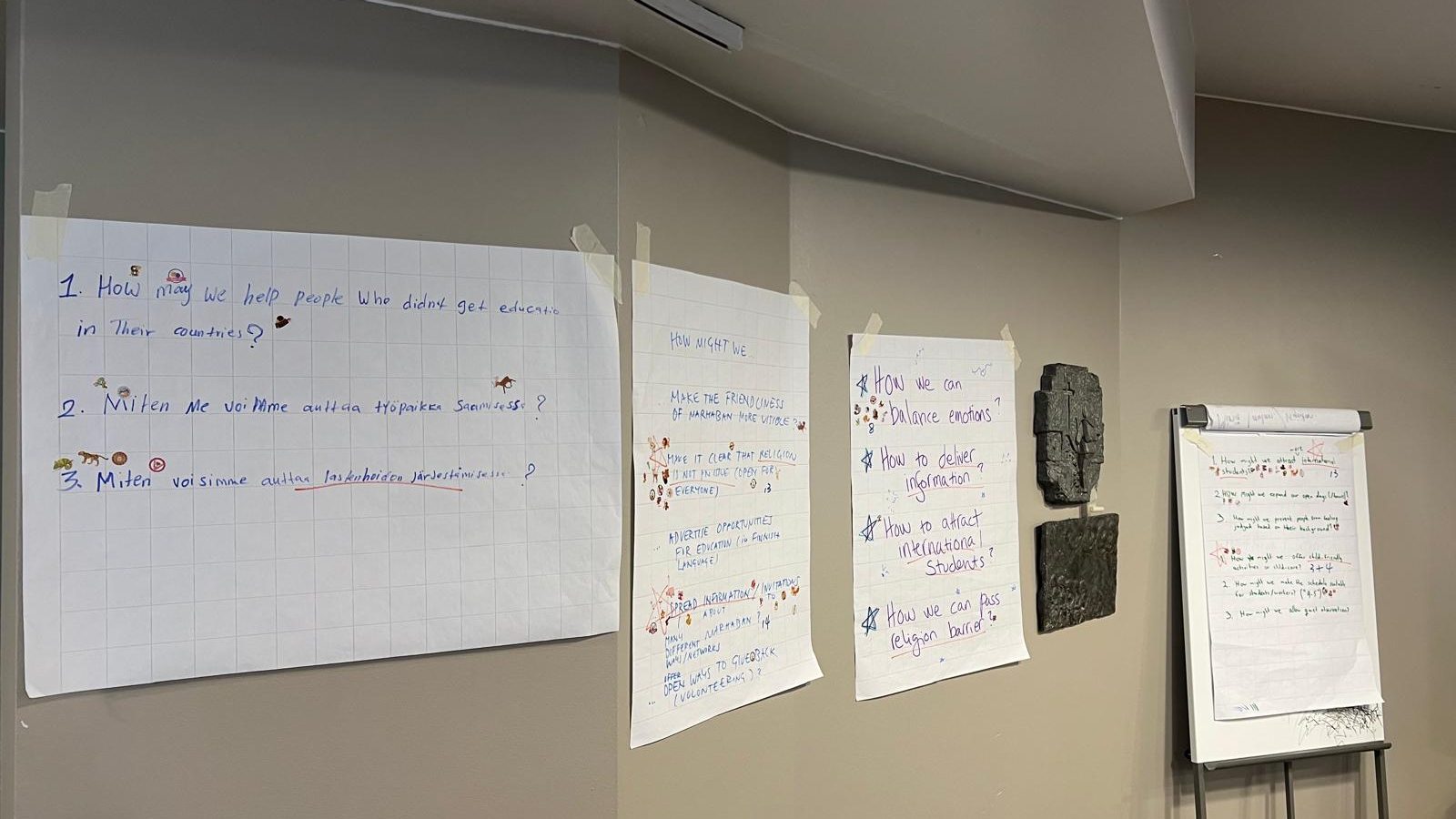
The discussions generated many practical ideas, such as providing clearer information about Marhaban and its services, attracting more international students in situations similar to Lamia’s, and providing child-friendly activities so that immigrants like Hawa and Minh could focus on their learning. Furthermore, the workshop reinforced Marhaban’s role as a community space rather than a traditional service provider. Immigrants were positioned as co-creators, contributing their knowledge and ideas, thereby enhancing their sense of belonging and ownership.
Conclusion
This case study demonstrates the meaningful role that service design tools can play in immigrant integration:
- Revealing how life experience shapes immigrants’ expectations.
- Identifying emotional and social needs that extend beyond the use of municipal official integration services.
- Supporting inclusive discussions between staff and clients.
By grounding service development on real-life experiences, Marhaban can continue to provide accessible, human-centered support that strengthens immigrant integration and community connection.
Source
Wang, L. (2025). Service Design for Immigrant Integration Support – Improving Services at Marhaban Center. Master’s Thesis. Turku University of Applied Sciences.
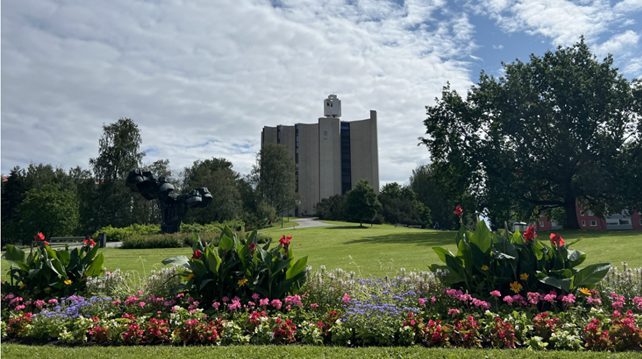
Article image: Exterior of the Kaleva Church where Marhaban Center is located (photo by Lianyi Wang).