
Internal quality deviations – why prevent them?
Internal quality deviations usually require an in-depth root cause analysis, and they create organisations additional costs by increasing additional work and amount of scrap. With preventative quality work organisations can increase competitiveness and profitability.
Internal quality deviations are events where a product or service quality doesn’t fulfil the quality specifications. Quality deviations can be caused by many factors, and in manufacturing companies they are most likely caused by raw materials, humane errors, and device malfunctions. (Ioppolo et al., 2024)
In the paint and coatings industry, quality deviations are mainly detected in the production phase by quality control, which then leads to internal quality deviations (Quevillon et al., 2019). Quality deviations that happen after the product leaves the warehouse are considered external quality deviations and, in most cases, lead to claims. (Ghunaim & Jaaron, 2022)
Quality is an expense
Commonly in discussions, quality control is just an additional cost, even though good quality is a central part of a competitive business. With a good quality control, it is possible to prevent and correct many quality related challenges and deviations in a process. (Ghunaim & Jaaron, 2022)
Quality is an expense, so it is worthwhile to improve the ways of working, so that quality is in every part of the process and customers are delivered the products and services that they expect and need. Preventive quality can be profitable, since in most cases it is much cheaper than correcting the quality deviations. The quality cost structure is illustrated below (Ghunaim & Jaaron, 2022):
- Low expense: Preventative actions
- Moderate expense: Quality control
- Expensive: Internal deviations
- Very expensive: External deviations
The cost of quality can be used as an incentive in quality development as in many cases preventative quality can prevent quality deviations. Also, increasing quality control decreases the likelihood of a deviation occurring. (Ghunaim & Jaaron, 2022)
Preventing quality deviations
The quality databases were analysed with Pareto analysis. Main finding from the 1st analysis was that roughly 50 % of all deviations were unsolved. The unknown batches were analysed further, and the finding was that 70 % of all deviating batches were produced on small batch production and production line 9.
Even though small batch production had the most deviations, production line 9 deviations were taken into further root cause analysis due to 63 % of deviation costs were generated at line 9. The root cause analysis was also limited to 2024, due to them being more urgent of an issue in the production.
An analysis on the raw material properties was conducted, and all the production batches with the raw material were analysed to see trends in raw material batch variation. The one faulty raw material batch had resulted in 3 deviations, compared to the older batch that was used for 2 years had caused 0 deviations. The root cause analysis led to finding one raw material that caused 75 % of the production line 9 deviations in 2024.
Profitable quality improvements
The root cause analysis ended at finding the defective raw material. Through some internal testing in R&D, the raw material was further tested and a better quality raw material was chosen to replace the current faulty raw material.
The decision to replace the raw material costed the manufacturing company approximately 2000 to 4000 euros annually, but prevented the internal quality deviations from happening. The deviations caused by the raw material costed the company approximately 40 000 euros, thus making the preventative change a very good cost saving action.
This result can be used for similar cases in the future to argue changes to better quality raw materials. In the end, preventative quality is all about choosing the best long-term projects and initiatives to enable the company to increase customer satisfaction and at the same time increase profits.
More detailed information can be read from the thesis in Theseus: https://urn.fi/URN:NBN:fi:amk-2025120231565
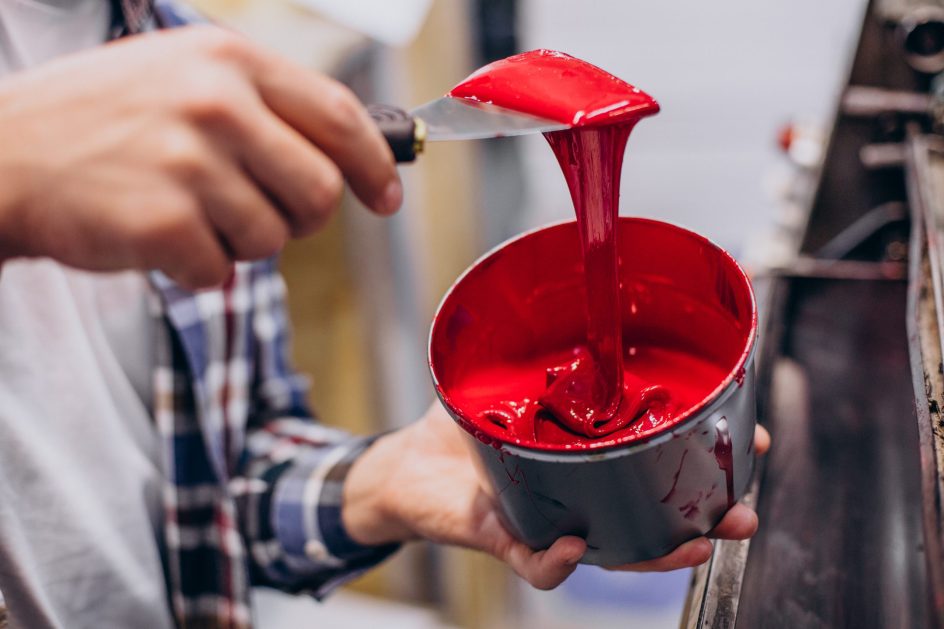
Image from: Freepik, Man working in printing house with paper and paints @senivpetro.
References
Ghunaim, N. M., & Jaaron, A. A. M. (2022). The influence of cost of quality on the performance of food manufacturing companies: an empirical study. The TQM Journal, 34(4), 788–806. https://doi.org/10.1108/TQM-01-2021-0026
Ioppolo, G., Ciliberto, C., & Szopik-Depczyńska, K. (2024). Total Quality Management and Lean Thinking 5.0: Theories and Methods (1st ed.). Routledge. https://doi.org/10.4324/9781032726748
Veikkolainen, M. (2025). Internal quality deviations: Study on root causes, prevention, and cost of quality [fi=Ylempi AMK-opinnäytetyö|sv=Högre YH-examensarbete|en=Master’s thesis|]. http://www.theseus.fi/handle/10024/903509
Quevillon, S., Toupin, N., Tremblay, A., Fournier, R., & Muehlethaler, C. (2019). Batch-to-batch variation in domestic paints: Insights into the newly commercialized recycled paints. Forensic Science International, 303, 109946. https://doi.org/10.1016/j.forsciint.2019.109946